
Hey there, aspiring interior designers! Are you feeling that familiar mix of excitement and nerves as your practical exam approaches? Trust me, I’ve been exactly where you are, staring at that long list of ‘required materials’ and wondering if I’ve got everything just right.
It’s not just about having the tools; it’s about having the *right* tools, the ones that feel like an extension of your creative hand and help you bring your vision to life flawlessly under pressure.
We all know how crucial this exam is for kicking off your dream career, and the last thing you want is to be caught off guard by a missing pencil or a wobbly T-square.
From my own experiences tackling these intense assessments, I’ve learned exactly what makes a difference and what’s absolutely non-negotiable in your kit.
No need to stress anymore about forgotten essentials or outdated equipment that won’t give you that edge. Let’s make sure you walk in fully prepared and confident, ready to impress.
Below, we’ll dive deep into every single item you’ll need to ace your interior design practical exam with flying colors!
Mastering Your Foundation: Precision Drafting Essentials
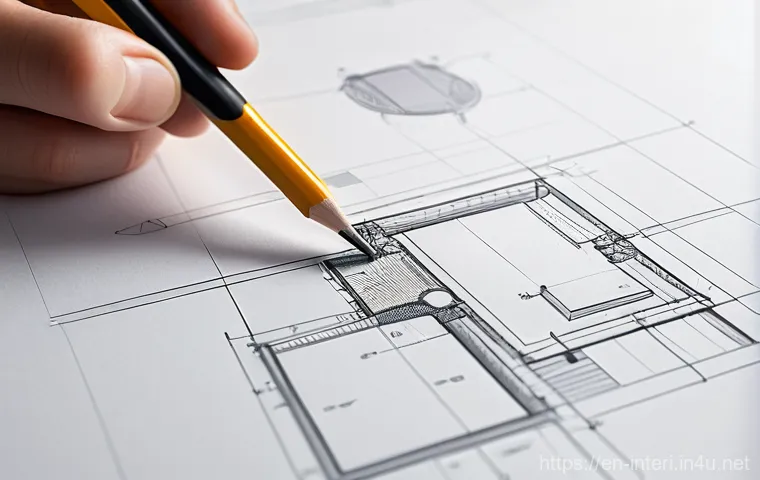
The Unsung Heroes: Your Drawing Surfaces and Straight Edges
Alright, let’s get real about what you’ll be working on and with. You know that feeling when you’re just getting into your flow, and then your drawing surface decides to wobble or your straight edge isn’t quite…
straight? It’s a nightmare, especially when every single line counts towards your final grade! That’s why I always tell my students to invest in a portable drawing board.
Not just *any* board, but one that’s sturdy, smooth, and preferably has some sort of non-slip feet. Trust me, I once had a cheap board slide around during a major rendering, and it nearly cost me a full section of my design.
You don’t want to be fighting your equipment; you want it to be an extension of your creative mind. Along with that, a high-quality T-square or a parallel bar is non-negotiable.
I personally lean towards a good parallel bar if the exam allows, as it offers unparalleled precision for those long, clean horizontal lines. But if you’re T-square bound, make sure it’s solid acrylic or aluminum, perfectly calibrated, and that the head is firmly attached at a true 90 degrees.
Check for any warping before the exam – a quick glance along the edge can save you hours of frustration.
The Art of the Perfect Line: Pencils, Pens, and Erasers
Oh, the humble pencil! It might seem basic, but having the right range can make or break your technical drawings. I always carry a full spectrum of lead hardnesses, from a soft 2B for sketching and rendering shadows to a hard 4H for crisp, light construction lines.
Mechanical pencils are a godsend for consistency, especially with 0.5mm and 0.3mm leads for intricate details. I remember one exam where my hand-sharpened wooden pencil kept breaking, and I wasted precious minutes at the sharpener.
Never again! For pens, don’t skimp on a good set of technical pens (like a Pigma Micron set) in various line weights (0.1mm, 0.3mm, 0.5mm, 0.8mm). These are key for rendering precise linework and bringing your drawings to life with varying depths.
And for erasers? A kneaded eraser is your best friend for lifting graphite without smudging or damaging the paper, while a vinyl eraser is essential for clean, complete removal of mistakes.
A good erasing shield can also be a lifesaver for correcting tiny errors without disturbing adjacent lines. It’s all about having the right tool for the job, ensuring every detail reflects your precision and care.
Shaping Your Vision: Measuring and Layout Precision
Scales and Rulers: Your Guides to Accurate Proportions
When it comes to interior design, accuracy is everything. A beautifully conceived space can fall apart if the scale is off, even by a fraction. That’s why your measuring tools are paramount.
You’ll need a good architectural scale and an engineering scale. My advice? Don’t just grab any cheap plastic one.
Opt for metal or a high-quality plastic that won’t warp over time. I’ve seen students struggle because their scale was slightly off, leading to proportional errors that were almost impossible to correct under exam pressure.
Understand how to read both metric and imperial scales, and practice using them efficiently. Speed and accuracy here are crucial. A durable, clear plastic ruler (12-18 inches) is also indispensable for shorter measurements and checking your work.
For curves, invest in a reliable French curve set and a flexible curve ruler. These allow you to create those elegant, flowing lines that can really elevate a design, adding that touch of sophistication.
Templates and Stencils: Speed and Consistency at Your Fingertips
In a timed practical exam, anything that saves you time and ensures consistency is gold. That’s where templates come in. You’ll want a quality circle template, an ellipse template (especially useful for showing curved furniture or lighting elements in elevation), and a basic furniture template.
While you *can* draw everything freehand, using templates guarantees uniform shapes and sizes, which is vital for professional-looking plans and elevations.
I recall one particularly stressful exam where I tried to freehand a series of perfectly identical chairs. It was a disaster! My hand cramped, and the chairs looked like they belonged in different rooms.
Learn from my mistakes: templates aren’t cheating; they’re smart design. A protractor is also a must-have for accurately measuring and drawing angles.
For those looking to add a bit more flair to their presentations, consider a small set of lettering stencils if your handwriting isn’t consistently neat – although often, exams prefer hand-lettering, so practice that too!
Bringing It All to Life: Color and Presentation Techniques
The Spectrum of Expression: Coloring Mediums and Their Application
Now, let’s talk about color, because this is where your design truly comes alive and shows off your unique style! For practical exams, you’ll typically be working with marker renderings, colored pencils, or sometimes even watercolor.
I always recommend a solid set of alcohol-based markers (like Copic or Prismacolor) in a diverse range of colors, including neutrals, earth tones, and a selection of vibrant accent colors.
The key here is to have a few different shades of the same color to create depth and dimension. Don’t forget a colorless blender! It’s magical for smoothing out transitions and creating gradients.
For fine details and subtle textures, a set of high-quality colored pencils (Faber-Castell Polychromos or Prismacolor Premiers are fantastic) is essential.
I’ve found that layering colored pencil over marker can create incredible richness and texture that really makes a rendering pop. And remember, practice blending!
Seamless transitions are a hallmark of a professional presentation.
The Final Polish: Adhesives, Cutting, and Finishing Touches
You’ve poured your heart and soul into your design, and now it’s time for the grand reveal. The presentation of your work is just as important as the design itself.
A sharp utility knife or X-Acto knife with plenty of fresh blades is absolutely vital for clean cuts. There’s nothing worse than a jagged edge on your beautifully mounted presentation board.
Trust me, I’ve seen fantastic designs lose points because of sloppy cuts. A self-healing cutting mat is also a non-negotiable for protecting your workspace and ensuring precision.
For adhesives, a spray adhesive is excellent for mounting large drawings smoothly, while a glue stick or double-sided tape is perfect for smaller elements or securing material samples.
Don’t forget a drafting brush or a clean cloth to wipe away eraser dust and keep your work pristine. These seemingly small details make a huge difference in how your final project is perceived.
They show professionalism, attention to detail, and a respect for your craft.
The Savvy Designer’s Toolkit: Organization and Extras
Keeping It All Together: Storage and Portability Solutions
Imagine the horror: exam day, you’re rushing, and suddenly your perfectly sharpened pencils spill everywhere, or your crucial templates go missing. A proper carrying case or portfolio for your drawings and a dedicated supply box for your tools are absolute must-haves.
I’ve always found that a hard-sided art case with multiple compartments is ideal for protecting delicate instruments and keeping everything organized.
It reduces stress, saves time, and prevents damage. I learned this the hard way after a favorite technical pen rolled off my desk and broke right before a deadline.
Don’t let that be you! A good roll-up pencil case or a sturdy pencil box is perfect for keeping your writing and drawing instruments separate and protected.
And for your finished drawings, a portfolio case that’s slightly larger than your largest sheet of paper will keep them crisp and free from creases.
Beyond the Basics: Unexpected Exam Day Lifesavers

Sometimes, it’s the little things that make the biggest difference. While not strictly “drawing tools,” these items have saved me (and countless students I’ve mentored) more times than I can count.
Think about a small, portable lamp if the exam room lighting is notoriously poor. Eye strain is real, and clear visibility of your lines is critical. A comfortable, ergonomic pencil grip can be a game-changer if you’re prone to hand fatigue during long drawing sessions.
I also always pack a small emergency kit: a few Band-Aids for accidental knife nicks, a snack bar for quick energy, and a bottle of water. Staying hydrated and comfortable helps you focus.
Oh, and a stopwatch! Time management is key in these exams, and having your own personal timer can help you pace yourself effectively. Remember, being prepared means thinking about every possible scenario, not just the obvious ones.
| Tool Category | Essential Items | Why It’s Critical for Your Exam |
|---|---|---|
| Drafting & Measuring | T-Square / Parallel Bar, Architectural Scale, Engineering Scale, Clear Ruler, Protractor | Ensures precise, straight lines and accurate proportional representations, fundamental for professional drawings. |
| Drawing & Linework | Range of Lead Pencils (H, HB, B), Mechanical Pencils (0.3mm, 0.5mm), Technical Pens (various weights), Kneaded Eraser, Vinyl Eraser, Erasing Shield | Allows for varied line weights, clean construction lines, detailed rendering, and flawless corrections without damaging your work. |
| Rendering & Color | Alcohol-Based Markers (diverse palette), Colored Pencils, Colorless Blender | Brings designs to life with vibrant color, texture, and depth, crucial for conveying mood and material finishes. |
| Templates & Aids | Circle Template, Ellipse Template, Furniture Template, French Curve Set, Flexible Curve Ruler | Saves time, ensures consistency in repetitive elements, and enables smooth, accurate curves and complex shapes. |
| Finishing & Protection | Utility/X-Acto Knife, Self-Healing Cutting Mat, Spray Adhesive, Drafting Brush, Portfolio Case | For clean, professional cuts, secure mounting, keeping work pristine, and safely transporting your final submission. |
Protecting Your Investment: Maintenance and Care
Keeping Your Tools in Prime Condition: Cleaning and Storage
Let’s face it, good tools aren’t cheap, and they’re an investment in your career. So, taking care of them isn’t just a recommendation; it’s a necessity.
How many times have I seen beautiful marker sets dry out because someone forgot to cap them? Or rulers scratched and smudged? It just breaks my designer heart!
After every drawing session, and especially leading up to your exam, take a few minutes to clean your tools. Wipe down your T-square or parallel bar with a soft cloth to remove graphite or ink residue.
Clean your scales to ensure they’re easy to read. Make sure all your marker caps are securely fastened – a simple click can save you from replacing an entire set.
Store your pencils and pens in their designated cases, preventing lead breakage and keeping nibs pristine. Proper storage not only extends the life of your tools but also ensures they’re ready to perform at their best when you need them most, especially under the pressure of an exam.
The Sharp Edge: Sharpening and Replenishing Your Arsenal
A dull blade or a blunt pencil can turn a precision task into a frustrating mess. Regularly check the sharpness of your utility knife blades and replace them often.
A fresh blade makes cutting through heavy paper or mat board feel like slicing through butter, giving you those super clean edges that really elevate your presentation.
For your mechanical pencils, always have extra lead refills. Running out of lead mid-drawing is an easy way to lose focus and precious time. And for your wooden pencils, a good quality sharpener that provides a consistent point is essential.
I prefer a hand-crank sharpener for its precision and less lead breakage compared to some electric models. For technical pens, make sure their ink cartridges are full and the nibs are clean and free of dried ink.
A small maintenance kit for your technical pens can be a lifesaver, allowing you to clear clogs quickly. Staying on top of these small maintenance tasks will ensure your tools are always as sharp and ready as you are!
Wrapping Things Up: Your Journey to Drafting Mastery
And there you have it, my fellow aspiring designers! We’ve covered a lot of ground, from the absolute essentials like your drawing board and T-square, to the nuanced world of rendering with markers and colored pencils. It might seem like a lot to take in, but trust me when I say that every single tool we discussed plays a crucial role in bringing your vision to life on paper. I’ve personally seen the transformation in my own work, and in countless students I’ve mentored, when they truly understand and respect their tools. Remember, these aren’t just inanimate objects; they’re extensions of your creativity, precision, and passion. Investing in quality and understanding how to use them effectively isn’t just about passing an exam; it’s about building a solid foundation for your entire design career.
I know the pressure of those deadlines and the intensity of practical exams can feel overwhelming. I’ve been there, heart pounding, hand cramping, wondering if my lines were straight enough. But the beautiful thing about mastering your toolkit is the confidence it instills. When you know your equipment inside out, when each pencil stroke feels deliberate and each measurement accurate, a huge chunk of that stress just melts away. So, take a deep breath, embrace the learning process, and remember that every perfectly drawn line is a step closer to realizing your design dreams. Keep practicing, keep refining, and keep that creative spark alive!
Extra Nuggets of Wisdom for Your Design Journey
1. Don’t be afraid to experiment with new tools or techniques. The design world is always evolving, and staying curious can unlock new levels of creativity and efficiency.
2. Connect with your peers and mentors! Share tips, ask questions, and learn from each other’s experiences. You’d be amazed at the shortcuts and insights you can gain from a good design community.
3. Regularly review your work with a critical eye. What could be improved? Where can you be more precise? Self-critique is a powerful tool for growth that I still use daily.
4. Take breaks! Seriously, stepping away from your drawing board, even for just 15 minutes, can refresh your perspective and prevent burnout. Your eyes and mind will thank you.
5. Document your progress. Keep a sketch journal or take photos of your work over time. Seeing how far you’ve come is incredibly motivating and helps you identify your strengths and areas for improvement.
Your Blueprint for Success: Key Takeaways
Alright, let’s distill all this wisdom down to the absolute core essentials, the things that truly make a difference, especially when you’re facing those high-stakes design challenges. From my own journey, and watching countless aspiring designers navigate the tricky waters of practical exams and real-world projects, I’ve seen firsthand how a well-prepared toolkit and mindset can elevate your work from good to truly exceptional. It’s not just about having the right gear; it’s about understanding its purpose and leveraging it to showcase your unique vision with unparalleled clarity and confidence.
Precision is Paramount
Never underestimate the power of a perfectly straight line or an accurately rendered curve. Your drafting and measuring tools — those T-squares, parallel bars, and architectural scales — are your foundation. They ensure that your design isn’t just aesthetically pleasing but also structurally sound and proportionally correct. I recall a time when a slight warp in my T-square led to a subtly skewed drawing, and the tiny error cascaded into a proportionally awkward elevation. It was a tough lesson, but it taught me that meticulous attention to the quality and calibration of these basic tools is non-negotiable. Every fraction of an inch matters in communicating your design intent clearly and professionally. Without this bedrock of precision, even the most brilliant concept can lose its impact.
Master Your Mediums for Maximum Impact
Your pencils, pens, and especially your coloring mediums, are where your design truly comes alive and captures attention. Understanding the nuances of lead hardness for construction lines versus rendering shadows, or how to blend alcohol markers for seamless gradients, isn’t just a technical skill; it’s an art form. When I first started, I thought any colored pencil would do, but I quickly learned that the depth and vibrancy you get from a quality set of Polychromos or the smooth coverage of Copic markers totally transforms a rendering. This mastery directly translates to higher engagement with your work. Imagine a portfolio where every detail, from the crispness of a technical line to the warmth of a rendered material, speaks volumes about your professionalism and artistic flair. This is where your personality shines through, engaging viewers (and potential clients!) and extending their dwell time on your stunning presentations.
Efficiency and Organization Fuel Creativity
Time is a precious commodity in design, especially during exams. That’s why templates, stencils, and a meticulously organized toolkit are your secret weapons. Think about the minutes you save by using a perfect circle template instead of freehanding it, or the frustration you avoid when you can instantly find the right technical pen because everything has its place. I’ve been in countless situations where having a well-stocked emergency kit, or even just extra blades for my X-Acto knife, saved me from a panic attack. These seemingly minor considerations boost your efficiency, reduce stress, and crucially, prevent avoidable mistakes that could impact your final output. Remember, a smoothly run design process allows your creative energy to flow uninterrupted, leading to better, more innovative results. It’s all about creating an environment where your genius can truly thrive without being bogged down by preventable hiccups.
Frequently Asked Questions (FAQ) 📖
Q: Alright, I’m stressing a bit about the cost of all these tools, but I absolutely, positively cannot afford to walk into that exam unprepared. What are the absolute must-have, non-negotiable items I should prioritize for my interior design practical exam, especially if I’m on a budget?
A: Oh, trust me, I’ve been there! That classic mix of excitement and “can I really afford all this?” is totally normal. When it comes to the essentials, you definitely want to channel your inner ninja and focus on quality over quantity for a few key items.
First up, a stellar T-square or parallel rule. Don’t skimp here, my friend. A wobbly, cheap one will cause you endless grief and messy lines, and that’s the last thing you need under pressure.
I remember once trying to save a few bucks on a T-square, and let me tell you, the frustration of trying to get a straight line was just not worth it.
Invest in one that feels solid and glides smoothly. Next, a diverse set of drafting pencils and good quality lead (think HB, 2H, and 2B). These are your bread and butter!
You’ll need different hardness levels for sketching, detailed work, and final lines. And please, for the love of clean drawings, get yourself a reliable kneaded eraser and a plastic eraser.
Nothing ruins a beautiful drawing faster than smudged erasures. Finally, a decent drawing board. It doesn’t have to be fancy or huge, but a stable surface is paramount.
These core tools are your foundation; get them right, and you’ll feel so much more confident walking into that exam!
Q: I’ve heard some horror stories about tools failing mid-exam – like a T-square warping or a pencil breaking at the worst moment! How can I make absolutely sure my equipment is in tip-top shape and won’t let me down when I’m under the gun?
A: You are so smart to think about this! Believe me, the last thing you want is a tool mutiny during your exam. It’s like a car breaking down on a road trip – avoidable with a little prep.
My top tip is to treat your tools like precious jewels. Before the exam day, thoroughly clean everything. Wipe down your T-square and triangles; dust can make lines inaccurate.
Check your rulers and templates for any nicks or bends – even a tiny imperfection can throw off your precision. For your pencils, make sure they’re sharpened to a perfect point, and if you use a lead holder, have extra lead ready.
For exacto knives, swap out that blade for a fresh, super-sharp one! Dull blades tear paper and look unprofessional. Also, and this is a big one, practice with your actual exam tools.
Don’t just pull them out of the bag on exam day. Use them for your study sessions to get a feel for them and catch any potential issues. I once had a triangle with a tiny crack that I only noticed because I was practicing a tricky angle.
Imagine if I hadn’t found that until the exam! A quick run-through ensures everything is working smoothly, giving you one less thing to worry about.
Q: Beyond the usual suspects, are there any “secret weapon” tools or clever hacks you’ve picked up from your own experience that really gave you an edge in your interior design practical exams?
A: Oh, absolutely! This is where the real insider knowledge comes in. While the basics are, well, basic, there are definitely a few unsung heroes that can be total game-changers.
My first “secret weapon” is a high-quality drafting brush. Seriously, a small, soft brush for clearing away eraser dust and lead shavings without smudging your work?
Pure magic! It keeps your drawings pristine and shows incredible attention to detail. Another one I swear by, if your exam allows for personal items, is a small, portable task light.
Sometimes the lighting in exam rooms can be a bit iffy, and having your own consistent light source can really reduce eye strain and help you see your lines clearly.
I remember one exam where the overhead lights flickered, and my little clip-on lamp saved my project from looking murky. And here’s a simple hack: a small, empty zip-lock bag.
Keep all your small items – extra lead, tiny erasers, thumb tacks – in it. It prevents them from rolling off your desk into the abyss and saves you precious seconds searching.
These aren’t just tools; they’re peace-of-mind providers that let you focus on your design, not minor annoyances.